Harlem Week 2026: The Complete Guide to New York's Biggest Neighborhood Festival
There are festivals. There are cultural events. And then there's Harlem Week, a celebration that outgrows both categories and, in 2026, is marking its 52nd year with one of its most significant editions yet.
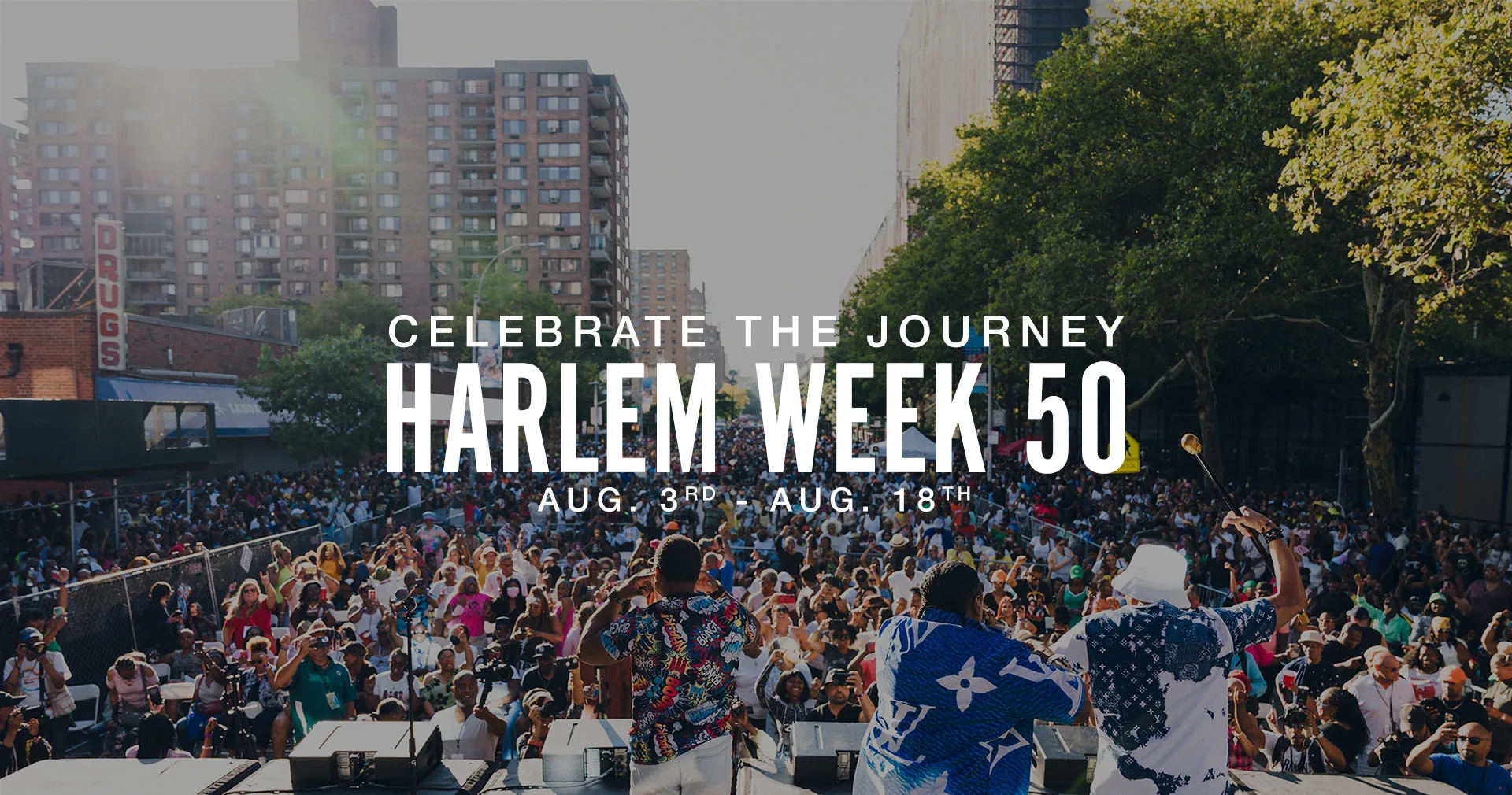
Harlem Week returns August 1-16, 2026, under the theme "Honoring Our Legacy," bringing sixteen days of live music, art, fashion, film, business programming, and community events to one of the most influential neighborhoods in the world. This year's honorees include Grammy-winning R&B and soul artist Maxwell, marking the 30th anniversary of his landmark 1996 debut album Maxwell's Urban Hang Suite, the late gospel legend Richard Smallwood, and the 50th anniversary of the Caribbean Cultural Center African Diaspora Institute.
What began in 1974 as a single day, Harlem Day, organized by Percy Sutton and Lloyd Williams to bring pride and stability to a neighborhood going through a difficult economic stretch, has grown into one of the largest neighborhood festivals on the East Coast, drawing crowds estimated in the millions across its run every summer.
For anyone visiting New York in early August, this is one of the most authentic and least touristy ways to experience the city.
The History of Harlem: The Neighborhood That Changed the World
To understand Harlem Week, it helps to understand Harlem itself, and its history is genuinely one of the most consequential in modern American culture.
From Dutch Farmland to the Capital of Black America
In 1658, Dutch settlers founded Nieuw Haarlem, named after the city of Haarlem in the Netherlands, in what is now upper Manhattan. For centuries it remained a quiet neighborhood of farms and European immigrants. Everything changed in the early 20th century.
As the Great Migration brought Black families north from the segregated South, Harlem rapidly became the cultural and demographic center of Black New York. By 1930, more than 70 percent of its residents were Black, and with that shift came an unprecedented cultural explosion.
The Harlem Renaissance: The Golden Years
The 1920s marked the height of what the world would come to know as the Harlem Renaissance, a period of literary, artistic, and musical flowering that reshaped American culture permanently. Duke Ellington composed at the Cotton Club, Billie Holiday filled the jazz clubs of Lenox Avenue with emotion, Langston Hughes wrote poetry that captured the Black American experience with devastating precision, and Louis Armstrong redefined what a trumpet could do.
The Cotton Club, the Savoy Ballroom, and the Apollo Theater became the temples of a new sound, jazz, that was born in Harlem and spread across the world. A bitter irony of the era: many of these clubs, including the Cotton Club itself, admitted only white patrons even as the performers on stage were Black.
The Apollo Theater: The Cathedral of Talent
If one place embodies Harlem's musical soul, it's the Apollo Theater on 125th Street. Since opening its stage to Black talent in 1934, it has launched careers that reshaped American music. Ella Fitzgerald was 17 when she won Amateur Night at the Apollo in 1934, a night that changed the course of music history. Aretha Franklin, James Brown, Michael Jackson, and Lauryn Hill all followed, each stepping onto that same stage.
Hip Hop: Harlem's Second Renaissance
If the 1920s gave Harlem jazz, the 1970s gave it something equally revolutionary. In the streets of the South Bronx and Harlem, DJ Kool Herc, Afrika Bambaataa, and Grandmaster Flash were inventing a new musical language that would come to dominate global music. The first Harlem Day in 1974 arrived at exactly the moment this movement was taking shape. That same year, Harlem Week's inaugural celebration helped drive the renaming of 7th Avenue to Adam Clayton Powell Jr. Boulevard, the first time a major New York street was named for a Black American.
Harlem Week 2026 Program: Confirmed Events
Under the theme "Honoring Our Legacy," the 2026 program spans events for every age and interest, and most are entirely free.
August 1: Senior Citizens Day and NYC Summer Streets. The official kickoff, with a celebration for older residents and Manhattan's Summer Streets initiative opening city streets to pedestrians.
August 5: Uptown Night Market and National Night Out. A night market with food trucks, crafts, and local Harlem vendors, alongside National Night Out programming focused on neighborhood safety.
August 6: Percy Sutton Harlem 5K Run and A Great Day in Harlem. A run through the streets of Harlem honoring the festival's founder, followed by a major open-air musical showcase featuring top performers from across the festival lineup.
August 7: Youth Conference and Economic Development Day. Panels and programming focused on entrepreneurship, youth development, and economic opportunity in the community.
August 9: Harlem SummerStage and Uptown Night Market. Free concerts featuring R&B, jazz, hip hop, and gospel acts, alongside a second night market.
August 15: Celebration Day. Harlem's west side waterfront, on 12th Avenue between West 130th and West 132nd Streets, transforms into the main stage for the day. Presented with SummerStage, the evening lineup features boundary-pushing R&B and soul voices including Bilal, the Soulquarians collective member known for his collaboration with Kendrick Lamar on To Pimp a Butterfly, and Mavis Staples, the 86-year-old blues, rock, and gospel hall-of-fame legend and Kennedy Center Honoree, performing songs from her fifteenth solo album.
August 15-16: Harlem Days. The festival's climax, with the highest concentration of activity across two full days: concerts, parades, food, art, and community programming throughout the neighborhood.
August 16: NYC Children's Festival and Alex Trebek Spelling Bee. A family-oriented festival and the beloved children's spelling competition that closes out the season.
Honoree spotlight for 2026: Maxwell, marking 30 years since his landmark debut album; the late Richard Smallwood, one of gospel music's defining figures; and the 50th anniversary of the Caribbean Cultural Center African Diaspora Institute, one of the city's foundational Afro-diasporic cultural institutions. Additional honorees are typically announced as the festival approaches.
Soul Food in Harlem: Eating Like a Local During Harlem Week
You cannot experience Harlem Week without talking about food. Soul food is Black American cuisine at its most foundational, born of necessity and elevated into a symbol of cultural identity.
Sylvia's Restaurant, at 328 Malcolm X Boulevard, has been serving what's widely called the world's most famous soul food since 1962, when Sylvia Woods opened its doors. Her fried chicken, mac and cheese, and ribs are legendary. During Harlem Week, lines form early; arrive ahead of the rush or reserve in advance.
Cotton Club, at 656 West 125th Street, revived the name of the original 1923 club as a space where you can enjoy live jazz, gospel, salsa, and Latin jazz over brunch or dinner, a genuine combination of history and hospitality during the festival.
Minton's Playhouse, founded in 1938 by saxophonist Henry Minton, remains one of the most historically significant jazz venues in the world. Today it operates as a restaurant and bar with live music every night, and special programming during Harlem Week.
Gospel Service: The Most Powerful Spiritual Experience in the City
Every Saturday at 10 AM, Mount Morris Ascension Presbyterian Church at 15 Mount Morris Park West hosts a gospel service that ranks among the most moving experiences New York has to offer: choirs with decades of tradition, and an energy that transcends any cultural or religious background. This experience is part of our Harlem and Gospel Mass Tour, and during Harlem Week it takes on an even richer dimension.
Getting to Harlem Week from Anywhere in New York
Take the 2 or 3 subway line to 125th Street station, the fastest route from Midtown Manhattan. The A, C, B, and D lines also stop at 125th Street. On foot from the northern edge of Central Park, it's roughly 10 to 15 minutes north along any avenue.
The main streets of Harlem get significantly crowded during the festival; the subway is the smartest way in. Bring cash, since many local vendors don't take cards. The biggest events, Harlem Days on August 15-16, draw enormous crowds, so arrive early. Wear comfortable walking shoes; the festival is best experienced on foot, moving between blocks and venues throughout the day.
Combine It With a Guided Tour of Harlem
Want to experience Harlem Week like a genuine local rather than a passerby? Our Harlem and Gospel Mass Tour is the perfect way to build context before the festival takes over the streets.
With a bilingual guide, you'll walk through the neighborhood's most iconic sites: the Apollo Theater, the elegant townhouses of Strivers' Row, murals commemorating the Harlem Renaissance, and 125th Street itself, closing with a gospel service that will genuinely give you chills. After the tour, you'll have the context to enjoy every corner of Harlem Week like someone who actually knows the neighborhood.
Frequently Asked Questions (FAQs)
When is Harlem Week 2026? Harlem Week 2026 runs from August 1 to August 16 in Harlem, Manhattan, marking its 52nd annual celebration with sixteen days of events across the neighborhood.
How much does it cost to attend Harlem Week? The vast majority of Harlem Week events are completely free and open to the public. Some special concerts and private venue events may charge admission. Street access, night markets, outdoor concerts, and Harlem Days itself are free.
What exactly is Harlem Week? Harlem Week is the largest Black, Caribbean, and Hispanic cultural festival on the East Coast of the United States, held annually in August in Harlem, Manhattan. It includes live concerts, food fairs, parades, art exhibitions, panel discussions, sports events, and family programming celebrating the neighborhood's history and culture.
Why does Harlem Week exist? Harlem Week began in 1974 as Harlem Day, a single-day event organized by Percy Sutton and Lloyd Williams to build pride and community during a difficult economic period for the neighborhood. The first event was successful enough to become an annual tradition that grew into the sixteen-day festival it is today.
What is the most important event in Harlem Week 2026? Harlem Days (August 15-16) is the festival's climax, with the highest attendance and most concentrated programming. Also notable: A Great Day in Harlem (August 6), the Uptown Night Market (August 5 and 9), and Celebration Day at the Apollo-presented waterfront event (August 15), featuring Bilal and Mavis Staples.
How do I get to Harlem from Midtown Manhattan? The fastest route is the subway. The 2 and 3 lines run directly to 125th Street from Times Square in under 10 minutes. The A, C, B, and D lines also stop at 125th Street.
Are there Harlem Week events for kids? Yes. Harlem Week includes extensive family programming, including the NYC Children's Festival (August 16) and the Alex Trebek Harlem Children's Spelling Bee. Art workshops and recreational activities for kids run throughout the festival.
Can I hear gospel music in Harlem during the festival? Absolutely. The Saturday gospel service at Mount Morris Ascension Presbyterian Church, at 15 Mount Morris Park West, every Saturday at 10 AM, is one of the neighborhood's most moving experiences. Harlem Week also features special gospel concerts at the Apollo Theater and various outdoor venues throughout the festival.
Ready to Experience Harlem Like Never Before
Book our Harlem and Gospel Mass Tour, and walk into Harlem Week already knowing where you are.
Related Articles
NYC Contrasts Tour & New York in One Day 2026: The Honest Guide
What to Do in NYC 2026: The Ultimate Guide
Edge NYC 2026: Inside the World's Highest Immersive Sky Experience
Real's Tours NYC is not affiliated with Harlem Week Inc., the Apollo Theater, or Sylvia's Restaurant. Event details, times, and lineups are subject to change; confirm current information at harlemweek.org before attending.