
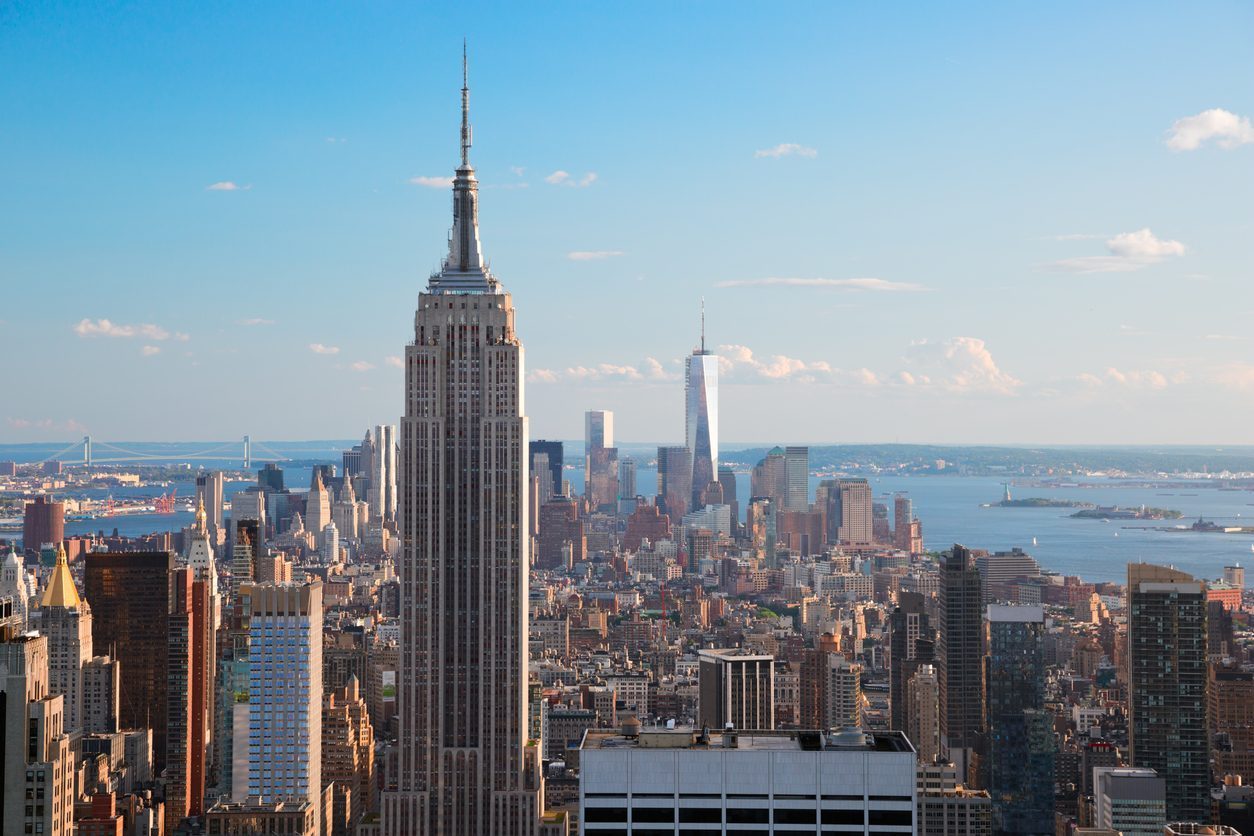
Empire State Building & NYC Skyscrapers: The Era of Giants
New York is the city that invented the modern skyscraper. Its towers form one of the most famous skylines in the world, admired by millions of visitors. At the center of this vertical history stands an iconic masterpiece: the Empire State Building, one of the most recognized buildings on the planet.
The Origin of the Skyscraper: Looking to the Sky
At the end of the 19th century, New York faced a challenge: the city was growing so fast that there was no more horizontal space. The solution was to build upward.
Key factors that made this vertical revolution possible:
- Steel structures that were both light and resistant.
- Safety elevators invented by Elisha Otis.
- High demand for office space and fierce competition between banks and corporations.
The First Generation of Giants (1890–1930)
Before the Empire State took the throne, New York was already home to impressive structures like the Flatiron Building, the Woolworth Building, and the Metropolitan Life Tower. By 1930, the Chrysler Building showcased the peak of Art Deco style. However, they were all soon surpassed by the king of kings: the Empire State Building.
The Empire State Building: An Architectural Miracle
Inaugurated in 1931, the Empire State is a symbol of New York’s ambition and strength. Its construction was a true miracle, completed in just 410 days during the Great Depression.
A Legacy of Speed and Art
- Construction Speed: More than 3,400 workers built 102 floors in record time.
- Global Record: It held the title of the tallest building in the world for 41 years.
- Art Deco Design: It is a brilliant example of Art Deco architecture, featuring geometric lines, metallic details, and a timeless marble lobby.
Experience the Views: World-Class Observatories
The Empire State Building offers two main observatories that provide the most romantic and spectacular views of Manhattan:
- 86th Floor: An open-air observatory with 360° views including Central Park, the Hudson River, and Brooklyn.
- 102nd Floor: A glass-enclosed gallery for a bird's-eye view from one of the highest points in the city.
The Modern Skyline: From Resilience to Innovation
New York never stopped reaching for the clouds. Today, the Empire State is joined by modern icons like:
- One World Trade Center: The tallest building in the Western Hemisphere and a symbol of resilience.
- The Edge at Hudson Yards: A futuristic neighborhood with the highest outdoor observation deck in the hemisphere.
- One Vanderbilt: A modern marvel next to Grand Central featuring the immersive SUMMIT experience.
Why Skyscrapers Define New York
Skyscrapers represent more than just glass and steel; they represent ambition, technology, and the American history of human dreams elevated to the sky. New York simply wouldn't be New York without its towering giants.
Standing at the base of these giants, you can’t help but feel the pulse of human potential. To look up at the Empire State Building is to see the physical manifestation of "if you can make it here, you can make it anywhere." Whether you are watching the lights change color from the street or staring out at the horizon from the 102nd floor, these towers remind us that in New York, the only limit is the sky.


