World Cup 2026 NYC/NJ: The $150 Train Problem, Real Transport Options, and Where to Watch for Free
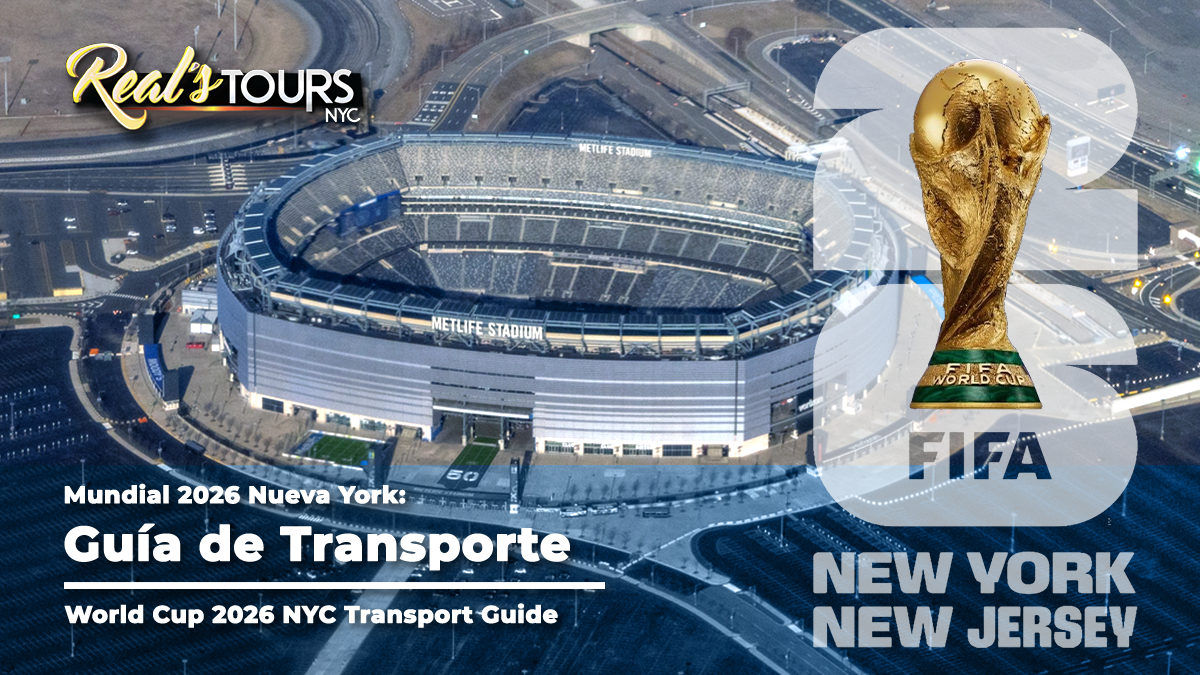
The 2026 FIFA World Cup lands in New York and New Jersey this summer, and MetLife Stadium, officially rebranded as New York New Jersey Stadium for the tournament, will host eight matches including the Final on July 19. Brazil, France, Germany, and England all play here from June 13 onward. Hundreds of thousands of fans from around the world will pass through this city during those weeks, and the vast majority of them will run into the same wall at some point: getting to the stadium from Manhattan is more complicated, more expensive, and more politically charged than any other host city in this tournament.
The headline number is $150 round trip by train. Eleven times the regular fare. For a fifteen-minute ride.
This guide is not going to sell you a transport package or tell you there is a simple solution. What it is going to do is lay out exactly what happened, exactly what your options cost, exactly what the logistics look like on matchday, and exactly where you can watch the World Cup for free inside New York City without spending a dollar on getting to New Jersey. By the time you finish reading, you will know enough to make your own call, and you will not be caught off guard by anything the day of your match.
The $150 Train: What Happened and Why
Start with the baseline. The regular round-trip NJ Transit fare between Penn Station in Manhattan and MetLife Stadium in East Rutherford, New Jersey, is $12.90. The trip takes approximately fifteen minutes and covers nine miles. It is a short, cheap, straightforward commuter rail hop under normal circumstances.
For World Cup matchdays, those circumstances no longer apply. NJ Transit announced that round-trip train tickets to MetLife Stadium would cost $150, an elevenfold increase over the typical fare. Only 40,000 tickets will be made available per match, sold exclusively through the NJ Transit mobile app in advance. No tickets will be available for purchase on the day of the match at station offices or vending machines.
The justification from NJ Transit is financial, not arbitrary. President and CEO Kris Kolluri estimated the total cost to the agency of hosting the tournament at $62 million. The federal government is contributing $10.6 million and the host committee just over $3 million, leaving NJ Transit absorbing $48 million with no contribution from FIFA. His position: everyday New Jersey commuters should not bear the cost of an event they are not attending. The fans going to the matches should.
New Jersey Governor Mikie Sherrill called on FIFA to cover the transportation costs directly, warning that she would not subsidize World Cup ticket holders on the backs of New Jerseyans who rely on NJ Transit every day. New York Governor Kathy Hochul called the fare awfully high. Senate Minority Leader Chuck Schumer called it a ripoff, plain and simple, pointing out that FIFA's budgeted revenue for the 2023-2026 cycle is approximately $11 billion, the most lucrative World Cup in the tournament's history.
FIFA's response was pointed. The organization noted that host cities including Los Angeles, Houston, and Dallas are keeping their transit fares unchanged, with round-trip costs of between $1.75 and $3.50. FIFA's chief operating officer Heimo Schirgi warned that elevated fares would have a chilling effect, pushing fans toward alternative transportation options and creating congestion, late arrivals, and diminished economic benefit for the entire region. FIFA also noted that the agreements signed with host cities back in 2018 called for free fan transportation to all matches, a commitment New Jersey is not honoring.
The political standoff has not been resolved. What has been resolved is the price: $150, no exceptions, buy it in advance or do not go by train.
How the Train Actually Works on Matchdays: Schedules and Restrictions
Before writing off the train entirely, understand how the system will actually operate on matchdays, because there are logistics here that affect everyone in the city, not just people going to the match.
Starting four hours before kickoff on each of the eight matchdays, NJ Transit rail service between Penn Station New York and Secaucus Junction will be restricted exclusively to holders of FIFA World Cup 2026 match tickets. This means Penn Station, the busiest rail hub on the East Coast, will operate with controlled access during that window for the Meadowlands line.
The route works as follows: trains run from Penn Station to Secaucus Junction, where fans transfer to the Meadowlands line that terminates at the stadium. NJ Transit estimates that 28,000 fans traveling from New York City will use this route on each matchday. Security checkpoints will be in place at Penn Station, Secaucus Junction, and the stadium itself.
Tickets will be linked to a specific boarding window, not an open-ended pass for the day. You cannot purchase a ticket and show up at Penn Station whenever you feel like it; you will have an assigned time block and will need to board within that window. This is a logistical detail many fans will not read until it is too late.
On the return journey, the precedent from this stadium is not encouraging. When MetLife hosted the Super Bowl under similar conditions in 2014, NJ Transit struggled badly with the volume of fans trying to leave simultaneously; platforms at Secaucus Junction became jammed and thousands of fans were unable to board the first available trains. The World Cup adds seven more matches to that experience, with a Final on July 19 that will draw maximum capacity crowds from around the world. The official advice is to leave the stadium immediately after the final whistle and not linger in the venue.
Transport Options Compared: What Each One Actually Costs
NJ Transit Train: $150 Round Trip
The fastest option in terms of travel time, the most expensive, the most limited in availability, and the most logistically demanding. Forty thousand tickets per match, app purchase only, assigned boarding window, full security check. If you want to take the train, buy your ticket the day sales open. At 40,000 tickets for a stadium of 78,000 people, they will not last.
Official Shuttle Bus: $80 Round Trip
Shuttle buses with capacity for approximately 10,000 riders will operate from the Port Authority Bus Terminal in Midtown Manhattan and from a second pickup point in Midtown East, just east of Grand Central Station. In New Jersey, a park-and-ride shuttle operates from the Hackensack Meridian School of Medicine in Clifton, running directly to the stadium.
The shuttle is the most accessible alternative for Manhattan-based visitors: Port Authority is reachable from almost anywhere in Midtown on foot or by subway, the price is roughly half the train fare, and the process is straightforward. It takes longer than the train but it works. Advance purchase required; no day-of availability.
Rideshare (Uber and Lyft): Variable, Estimate $80-$150 or More Per Leg
Uber and Lyft will be operating on matchdays, but surge pricing is anticipated and neither service will be permitted to drop off on stadium property. All rideshare pickups and drop-offs will be handled through a designated zone at Meadowlands Racing and Entertainment, approximately one mile from the stadium entrance. Fans will need to walk that final mile in both directions.
In practical terms: rideshare on a World Cup matchday in this corridor, with every fan in the region competing for cars at the same time, is not a budget option and may not even be a time-saving option given expected traffic conditions. Treat it as a contingency, not a plan.
Parking at American Dream Mall: $225, Advance Purchase Only
MetLife's usual parking lots are being used for the FIFA Fan Village, shuttle staging areas, operations infrastructure, and FIFA staff during World Cup matches; they are not available to the general public. The only nearby parking option is the American Dream Mall, where advance passes cost $225. From there, fans walk to the stadium. If you are driving in from outside the city, that is your full calculation: $225 for parking, plus the cost of driving into the New Jersey Meadowlands corridor on one of the most congested matchdays the area has ever seen.
Walking: Not an Option
Walking access to MetLife Stadium is prohibited on World Cup matchdays. The roads surrounding the stadium are not pedestrian-friendly and the security perimeter does not accommodate foot traffic approaching from outside the designated transport zones. Anyone attempting to walk will be redirected.
Side-by-Side Summary
NJ Transit train: $150 round trip, 15-minute ride, 40,000 tickets per match, app purchase with assigned boarding window required. Official shuttle: $80 round trip, 30-45 minutes estimated, 10,000 spots per match, advance purchase required. Rideshare: $80-$150 or more per leg, surge pricing expected, drop-off one mile from stadium, walk required. Parking at American Dream: $225 advance purchase, walk from mall to stadium included. Walking to stadium: prohibited.
Fan Fests and Free Viewing: Where to Watch in the City
If you do not have a match ticket, or if you simply want to experience the World Cup atmosphere inside New York City rather than spending $150 to leave it, there are confirmed official venues for free or low-cost viewing in 2026.
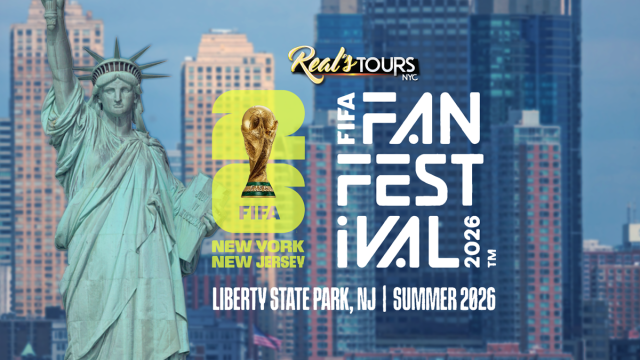
One important update before diving in: Liberty State Park in Jersey City, originally announced as the flagship Fan Festival for the NY/NJ region with a capacity of over 45,000 and a full 39-day program, was officially cancelled in February 2026 and replaced by two venues inside New York City. If you see Liberty State Park still listed as an active Fan Fest location anywhere, that information is out of date.
Fan Zone Queens, Louis Armstrong Stadium, USTA Billie Jean King National Tennis Center
The Fan Zone Queens is located at the USTA Billie Jean King National Tennis Center in Flushing, with Louis Armstrong Stadium serving as a 10,000-capacity screening venue for select group stage matches. Produced by Live Nation in partnership with the NYNJ Host Committee, it runs from June 17 to June 28, 2026, covering the group stage window when the highest-profile matches take place.
The event includes live match broadcasts, family-friendly entertainment and interactive games, cultural showcases, local food vendors, official merchandise, and VIP hospitality experiences. Entry requires a free advance ticket obtained through Live Nation; it is free to attend but not a walk-up venue. Reserve in advance, particularly for the highest-demand match days.
Getting there: the 7 train from Times Square runs directly to Mets-Willets Point station, adjacent to the USTA campus, in approximately 30 minutes at standard subway fare. The surrounding Flushing neighborhood also offers some of the most diverse and affordable dining in the entire New York metro area, with the largest Chinatown outside Manhattan and cuisine from dozens of countries within walking distance. This is one of the best places in the city to be on a World Cup matchday.
Fan Village, Rockefeller Center, Midtown Manhattan
The Fan Village at Rockefeller Center, produced in partnership with Telemundo and the NYNJ Host Committee, transforms the iconic ice rink into a temporary soccer pitch surrounded by large screens for live match broadcasts. The experience spans the entire three-block Rockefeller Center campus, including Top of the Rock, running from July 4 to July 19, 2026, covering the knockout rounds: quarterfinals, semifinals, and the Final on July 19.
Admission is completely free, with no advance registration required. The location is as central as it gets: walkable from Times Square, steps from Grand Central, and reachable from anywhere in Manhattan via the B, D, F, or M subway lines to 47-50th Street Rockefeller Center.
Be realistic about capacity: Rockefeller Center Plaza is not a stadium. For the Final on July 19, arrive at least two hours before kickoff if you want a good position in front of the screens.
Coverage Gap: June 11-16
Fan Zone Queens opens June 17 and the Rockefeller Center Fan Village opens July 4, leaving the tournament's opening days without a confirmed major official free-viewing venue in the city. The host committee has indicated additional pop-ups and Fan Zones will be announced. For those first days, neighborhood bars and community events will fill the gap organically, particularly in Jackson Heights, Arthur Avenue in the Bronx, and Midtown soccer bars.
Practical Matchday Logistics: How Much Time You Actually Need
If you have a match ticket and you are heading to MetLife, this is the honest timeline.
Plan to leave your Manhattan accommodation three to three and a half hours before kickoff. Penn Station begins its access restrictions four hours before the match, and the volume of fans converging on a single transit hub in a compressed window rewards early movers and punishes anyone who cuts it close.
At the stadium end, the post-match exit is where the system is most vulnerable. The 2014 Super Bowl at MetLife demonstrated clearly that NJ Transit's capacity to handle large simultaneous departures from this stadium has limits. Leave the moment the final whistle blows.
If you are using the shuttle from Port Authority, allow the same departure window. Port Authority Bus Terminal will be under significant pedestrian pressure in the hours before each match.
One practical note about Penn Station that many visitors overlook: the four-hour access restriction applies specifically to the Meadowlands line. Other Amtrak and NJ Transit services to different destinations continue operating normally, but the physical concentration of tens of thousands of fans moving through one terminal will affect conditions for everyone passing through Penn Station on matchdays, regardless of where they are going.
Is the Stadium Worth It, or Is the City the Better Experience?
This is the honest question, and the answer depends on what you actually want from this trip.
Going to the stadium is the full World Cup experience: 78,000 people in one place, the noise, the scale, the flags, the energy that only happens when that many humans are united around one thing at one time. Ticket prices on the secondary market currently range from $450 to $900 for group stage matches, with higher-demand games for Brazil and England starting around $1,000 and the Final reaching as high as $10,000. Add $80 to $150 for transport and you are looking at a minimum spend of $530 to $1,050 per person for a regular group stage match. For the Final, budget well over $1,500 per person before food and drink.
If that is in your budget and you want to do it, do it. There is no substitute for being inside that stadium.
But here is what the stadium cannot give you: New York.
The city around you during these weeks is New York as it almost never is, alive with two hundred nationalities sharing the same streets, the same subway cars, the same parks, the same bars. The Fan Zone at the USTA Center in Queens, surrounded by the most ethnically diverse neighborhood in the United States, is a genuinely extraordinary place to watch a World Cup match. The Fan Village at Rockefeller Center during the Final is, in its own way, a once-in-a-generation New York moment. And between every match, whether you have been to the stadium or watched from a bar in Brooklyn, the city is still there.
❓ Frequently Asked Questions (FAQs)
When do the $150 NJ Transit tickets go on sale? Tickets will go on sale through the NJ Transit mobile app only. No day-of-match availability at station offices or vending machines. Only 40,000 tickets per match will be sold. Given that 40,000 transit tickets for a stadium of 78,000 people represents partial coverage at best, buy your ticket as soon as the sale opens.
Can I drive to MetLife for a World Cup match? Not effectively. The stadium's regular parking lots are not available to the public during World Cup matches. The only nearby parking is at the American Dream Mall, priced at $225 for advance purchase only. From the mall, you walk to the stadium. Factor in Meadowlands corridor traffic on a matchday and driving becomes a long and expensive option.
Where exactly does the official shuttle pick up? The official shuttle operates from the Port Authority Bus Terminal in Midtown Manhattan and from a Midtown East pickup point located east of Grand Central Station. In New Jersey, a park-and-ride shuttle runs from the Hackensack Meridian School of Medicine in Clifton. No hotel pickups or other Manhattan locations.
Is the Fan Zone Queens really free? Entry to Fan Zone Queens requires a free advance ticket through Live Nation, not a paid ticket. The event itself is free to attend; budget separately for food, drinks, and merchandise inside the venue.
Does the Fan Village at Rockefeller Center need a ticket? No. Admission to the Rockefeller Center Fan Village is completely free with no advance registration required. It runs July 4-19, covering the knockout rounds through the Final.
What happened to Liberty State Park Fan Fest? Liberty State Park was officially cancelled as a Fan Fest venue in February 2026 and replaced by Fan Zone Queens and the Rockefeller Center Fan Village. Any information still listing Liberty State Park as an active venue is outdated.
How many World Cup matches does MetLife Stadium host? MetLife Stadium hosts eight matches in total, including the Final on July 19. Group stage matches begin June 13 and include games featuring Brazil, France, Germany, and England.
Is Penn Station closed on matchdays? Not closed entirely. The restriction applies specifically to NJ Transit rail service between Penn Station and Secaucus Junction, which is limited to World Cup ticket holders for the four hours before kickoff. Other Amtrak and NJ Transit services to different destinations continue operating normally.
New York Is Still Out There
We are not in the business of getting you to MetLife Stadium. That is between you, NJ Transit, and however much of your budget you are willing to allocate to a fifteen-minute train ride.
What we are in the business of is showing you the city that most visitors, even those who have been to New York before, barely scratch the surface of. The Bronx that gave the world hip-hop, salsa, and Yankee Stadium. The Brooklyn waterfront at dusk. Harlem on a Sunday morning. The Queens that houses more cultures per square mile than anywhere else on the planet.
Between matches, before matches, after matches, or instead of matches: New York is out there. Our guides and street vendors are in Manhattan all summer. If you find us, ask us anything. If you would rather plan ahead, everything is on our website.
👉 Explore NYC Tours — Real's Tours NYC
The World Cup runs 39 days. New York runs forever. Make time for both.
📚 Related Articles
World Cup 2026 NYC Fan Zones: The Complete No-Ticket Guide
NYC Contrasts Tour & New York in One Day 2026: The Honest Guide
What to Do in NYC 2026: The Ultimate Guide
Is the Bronx and Brooklyn Dangerous? The Truth About NYC Neighborhoods in 2026
Washington DC Day Trip from New York City: The Complete 2026 Guide
📌 Sources
This article was researched and written using information from the following sources, consulted in April 2026:
ESPN, "World Cup fans to MetLife Stadium will pay $150 train fares," April 2026. Al Jazeera, "US confirms transit fare spike to $150 for World Cup fans in New Jersey," April 2026. NBC News, "Taking the train to New Jersey World Cup games? It'll cost you $150," April 2026. CBS New York, "NJ Transit tickets for FIFA World Cup games will cost $150," April 2026. Fox News, "Chuck Schumer calls on FIFA to cover $150 NJ Transit fares," April 2026. WHYY, "FIFA World Cup 2026: What's behind NJ Transit's sky-high fares?" April 2026. NJ Transit Official Press Release, "FIFA World Cup 2026 NY/NJ Host Committee and NJ Transit Announce Regional Stadium Mobility Plan," April 2026. FIFA World Cup 2026 NYNJ Host Committee, nynjfwc26.com, Fan Experiences page, April 2026. KickoffAdventures, "World Cup 2026 Fan Zones: Confirmed Locations in All 16 Host Cities," March 2026. Mommy Poppins, "Your Family Guide to the World Cup 2026 in NYC and NJ," April 2026.
Real's Tours NYC is not affiliated with FIFA, NJ Transit, or the NYNJ Host Committee. All pricing and logistics information is subject to change. Readers are encouraged to verify current information directly with official sources before making travel decisions.