The Financial District—affectionately known by locals as "FiDi"—is located at the absolute southern tip of Manhattan. But this neighborhood is much more than just a hub for global bankers in sharp suits. This is the very spot where New York City was born.
Walking through these streets is like walking through a living timeline. It is a striking, unique blend where 17th-century colonial history, modern glass architecture, and the center of global business collide. At Real’s Tours NYC, we invite you to explore the labyrinth of streets where the economic future of the world is decided every single day, and where the foundation of the United States was laid.
The Origins of New York: New Amsterdam
Before it was the concrete jungle we know today, New York was a modest trading post. Founded by the Dutch in 1625 as New Amsterdam, this area served as the very first European colony on the island of Manhattan.
If you look closely, the modern grid system of New York completely disappears down here. Today, the narrow, winding cobblestone paths of Stone Street (the oldest paved street in the city) and Pearl Street still perfectly preserve the original colonial street map, standing in stark contrast amidst the towering, futuristic skyscrapers that surround them.
Wall Street: Power, Money, and Iconic Symbols
How did a small colonial pathway become the global symbol of capitalism? The name "Wall Street" is quite literal: it comes from a physical wooden wall built by the Dutch in 1653 to protect their colony from potential British and Native American attacks.
Today, that defensive wall is gone, replaced by the titans of finance. Here are the monumental symbols you must see:
| Landmark | Location / Address | Historical Significance |
| New York Stock Exchange (NYSE) | 11 Wall Street | Founded in 1792 under a buttonwood tree, it is now the world's largest, most powerful, and most famous stock exchange. |
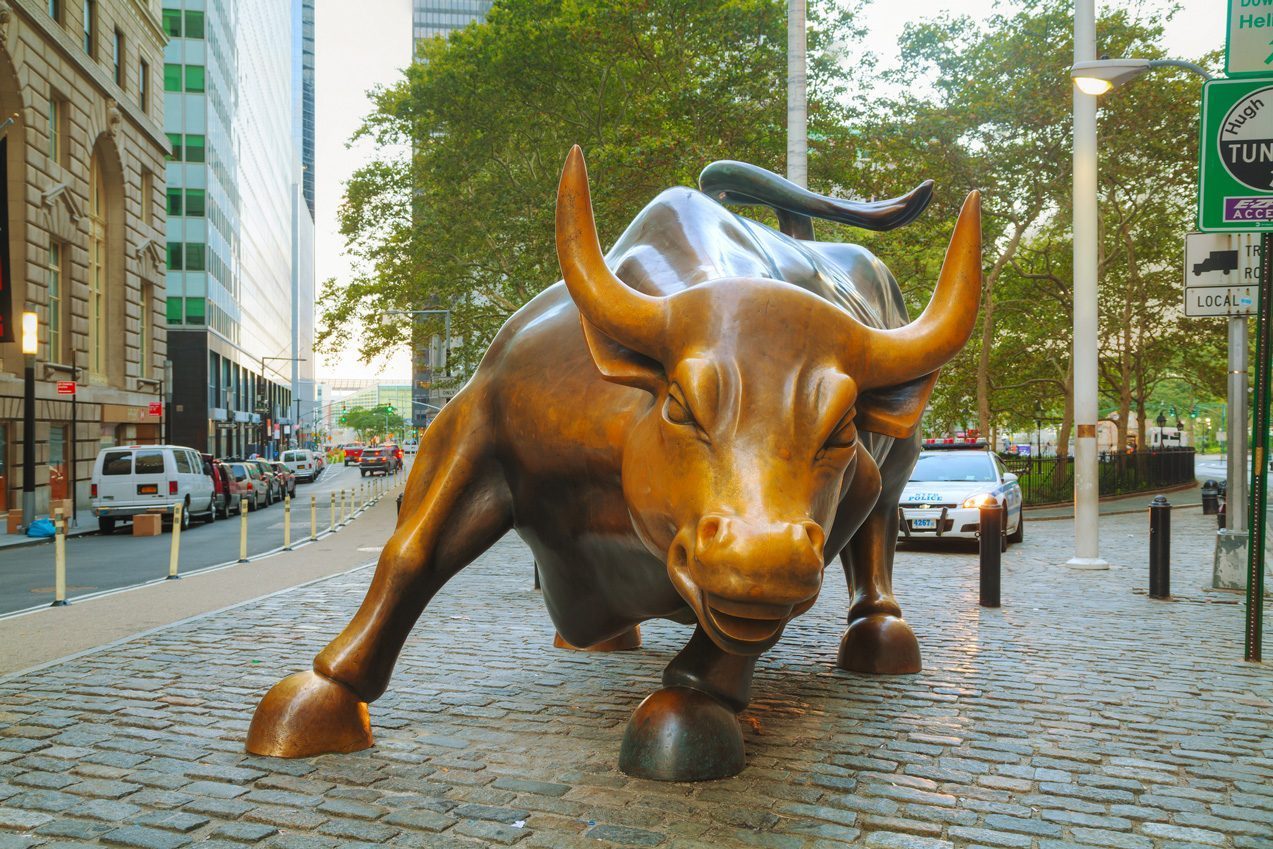
| The Charging Bull | Bowling Green Park | Created secretly by Arturo Di Modica in 1989 after a stock market crash, this 3-ton bronze sculpture represents the aggressive energy and optimism of financial markets. |
| Fearless Girl | Facing the NYSE (Broad St) | Originally placed facing the Bull, she now stands bravely across from the Stock Exchange, symbolizing female empowerment and the future of corporate leadership. |
Local Photography Tip: The Charging Bull is one of the most photographed statues in the world. If you want a picture without dozens of tourists in the background, you must arrive before 8:00 AM!
Where a Nation Began: Federal Hall & Trinity Church
Wall Street is not just about money; it is about the birth of a democracy. Right at the corner of Wall and Broad Streets sits Federal Hall. This is arguably one of the most historically significant buildings in the country. It was here, on the balcony of the original structure in 1789, that George Washington took the oath of office as the very first President of the United States.
Just a short walk down Wall Street brings you to Trinity Church. Once the tallest building in New York, its tranquil cemetery is the final resting place of Alexander Hamilton, the nation's first Secretary of the Treasury, whose legacy has been globally revived by the hit Broadway musical.
Memory and Modern Resilience: The World Trade Center
Just steps away from the colonial history of Wall Street lies a place of profound reflection, modern resilience, and hope. The World Trade Center complex has been beautifully rebuilt to honor the past while looking toward the future.
- 9/11 Memorial: Two massive, breathtaking reflecting pools occupy the exact footprints where the Twin Towers once stood. The names of every person who perished are inscribed in bronze around the edges.
- One World Trade Center (The Freedom Tower): Standing at a symbolic 1,776 feet tall, it is currently the tallest skyscraper in the Western Hemisphere.
- The Oculus: A futuristic transit hub and shopping mall designed by Spanish architect Santiago Calatrava, designed to look like a dove being released from a child's hands.
Visitor Guide & FAQs: Conquering the Financial District
Is it safe to visit the Financial District?
Yes, absolutely. It is one of the safest, most heavily monitored, and well-patrolled neighborhoods in New York City due to the high concentration of financial institutions and government buildings.
Can I go inside the New York Stock Exchange?
No. Since the events of 2001, the NYSE has been permanently closed to the general public for security reasons. However, observing its majestic neoclassical facade from Broad Street remains a top highlight.
How long should I spend exploring this area?
Lower Manhattan is dense with attractions. To see the highlights comfortably without rushing, we recommend allocating your time as follows:
| Attraction / Area | Recommended Time to Spend |
| Wall Street & Federal Hall | 45 - 60 minutes |
| Charging Bull & Battery Park | 45 minutes |
| 9/11 Memorial (Pools only) | 30 - 45 minutes |
| 9/11 Museum (If entering) | 2.5 - 3 hours |
Experience Lower Manhattan with the Experts
For a perfect historical contrast, you can stand at the 18th-century grave of Alexander Hamilton and then walk just two blocks to gaze at the ultra-modern Oculus. It is the absolute best way to see how 400 years of history coexist in a single square mile.
But navigating these winding, chaotic streets and fully grasping their historical weight can be overwhelming on your own. Let Real’s Tours NYC guide you through the financial heart of the world!
Our Upper and Lower Manhattan Tour is specifically designed to take you comfortably through these iconic sites. We will walk you through the history of Federal Hall, the secrets of Wall Street, and provide a respectful, guided experience at the 9/11 Memorial.
Want to see it all in a single, unforgettable day? Combine this history with stunning views on our New York in One Day Tour: Central Park, 9/11 & Statue of Liberty View Ferry.
Ready to walk the streets where history is made?
- Book Your Tour Here
- WhatsApp Us: +1 (718) 362-0165
- Email Us: info@realstoursnyc.com