
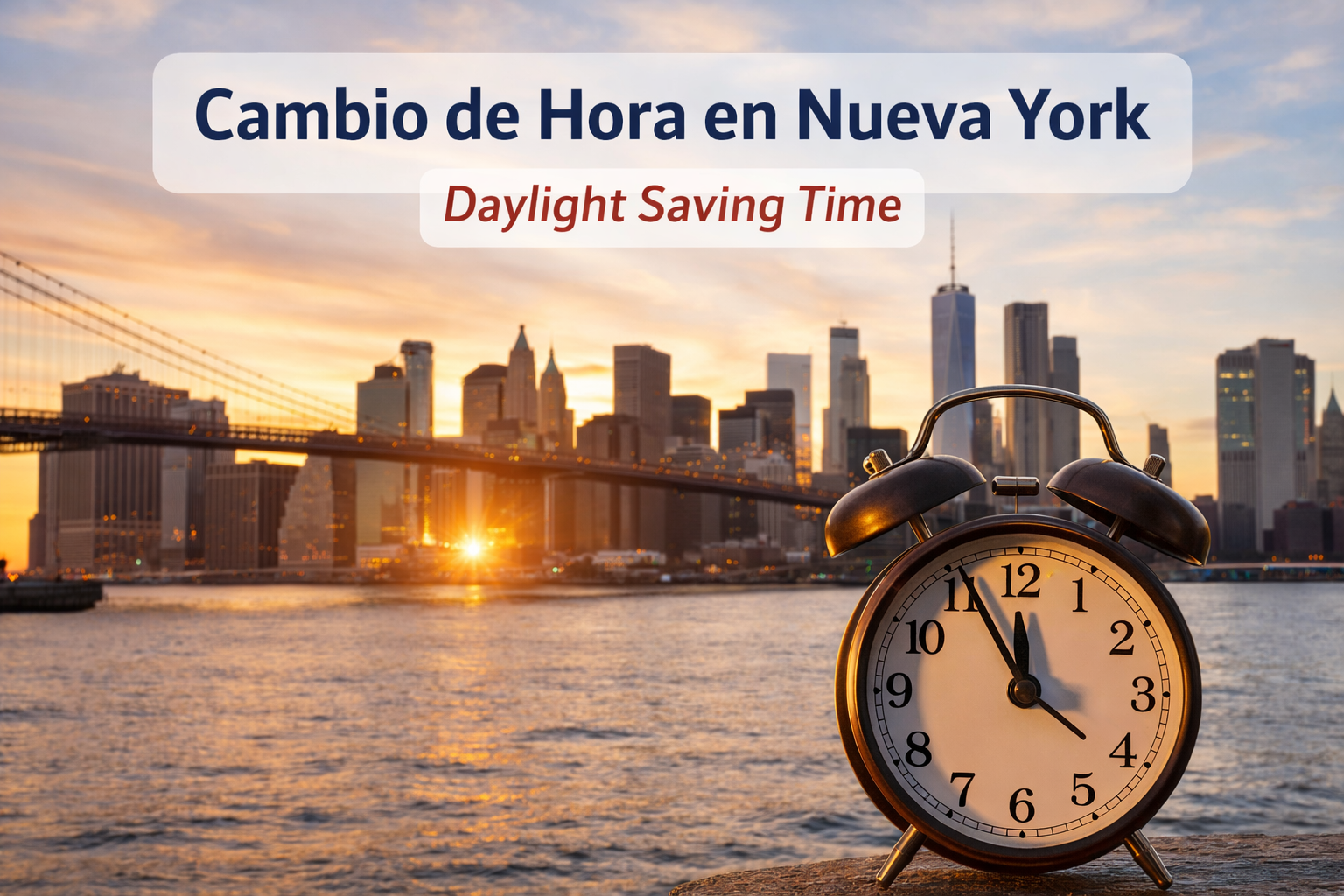
Every year, millions of people in the United States move their clocks forward by one hour. This change is known as Daylight Saving Time (DST), and it affects cities like New York City and much of the country.
For many tourists visiting New York, the time change can be confusing. However, this system has over 100 years of history and was created with a very specific goal: to make better use of sunlight.
But the questions many travelers ask are:
- Why does the time change exist?
- Who invented Daylight Saving Time?
- Why does the United States move the clock forward an hour?
The history behind this practice is more interesting than it seems.
📜 The Origin of the Time Change
Benjamin Franklin’s Idea
One of the first to suggest something similar was Benjamin Franklin in 1784. While living in Paris, he wrote a humorous essay suggesting that people could save candles if they woke up earlier to take advantage of the sunlight.
Although his proposal was not exactly an official time change, it was one of the first ideas on how to better use natural light.
George Vernon Hudson’s Proposal
Much later, in 1895, New Zealand scientist George Vernon Hudson proposed moving the clocks forward during the summer to have more daylight hours in the evening. His idea began to be seriously considered by several governments.
🌍 When Daylight Saving Time Began
The First Official Use
Germany was the first country to officially implement the time change in 1916 during World War I. The main objective was to save energy, as having more natural light in the evening reduced the use of electricity and coal for lighting.
Arrival in the United States
The idea quickly spread across Europe and shortly after arrived in the United States. In 1918, the U.S. adopted Daylight Saving Time for the first time.
🇺🇸 The Time Change in the United States
The Uniform Time Act
The modern Daylight Saving Time system was officially regulated by the Uniform Time Act of 1966. This law established clear rules for the entire country, preventing each state from changing the time on different dates.
Currently in the United States:
- In March, the clock moves forward one hour ("Spring Forward").
- In November, it returns to Standard Time ("Fall Back").
This means that for several months of the year, there are more hours of light in the afternoon.
🕰 When Does the Time Change in New York?
In the state of New York, the change normally occurs on the second Sunday of March. The clock is set forward at 2:00 AM, jumping directly to 3:00 AM. Although an hour of sleep is lost that night, the benefit is that the days have longer and brighter evenings.
🌇 How Daylight Saving Time Affects Tourists in NYC
For those visiting New York City, Daylight Saving Time offers several advantages. Longer daylight hours in the evening allow for a better experience at iconic locations such as:
- Central Park
- Brooklyn Bridge
- Times Square
Many visitors take advantage of these extra hours of light to walk through Manhattan, take photographs, or explore different neighborhoods in the city.
🧠 Fun Facts About the Time Change
There are several curious facts about Daylight Saving Time that many tourists are unaware of:
- Not all U.S. states change the time: States like Arizona and Hawaii do not use this system.
- Global Reach: More than 70 countries around the world apply some form of daylight saving time.
- Ongoing Debate: The debate continues, as some experts believe the time change could be eliminated in the future.
🗽 Travel Tips for Visiting New York
If you visit New York City during Daylight Saving Time, you will notice the city has a different energy at the end of the day. The longer evenings allow for more time walking through Manhattan or exploring other boroughs.
Many travelers use these additional hours of light to tour different areas of the city and discover the cultural diversity that makes New York unique.
Frequently Asked Questions (FAQs)
When does the time change in New York?
The change occurs on the second Sunday of March, when the clock moves forward one hour.
Why does Daylight Saving Time exist?
It was primarily created to make better use of sunlight and reduce energy consumption.
Do all U.S. states change the time?
No. States like Arizona and Hawaii maintain the same time year-round.
🌇 How This Benefits Your Trip
More daylight in the evening means more time to explore! With the sun setting later, icons like Central Park, the Brooklyn Bridge, and Times Square stay vibrant under natural light for longer.
This is the perfect season to book our New York in One Day Tour. With the extra hour of light, our panoramic views of the Statue of Liberty become even more spectacular.


